Research
Methods
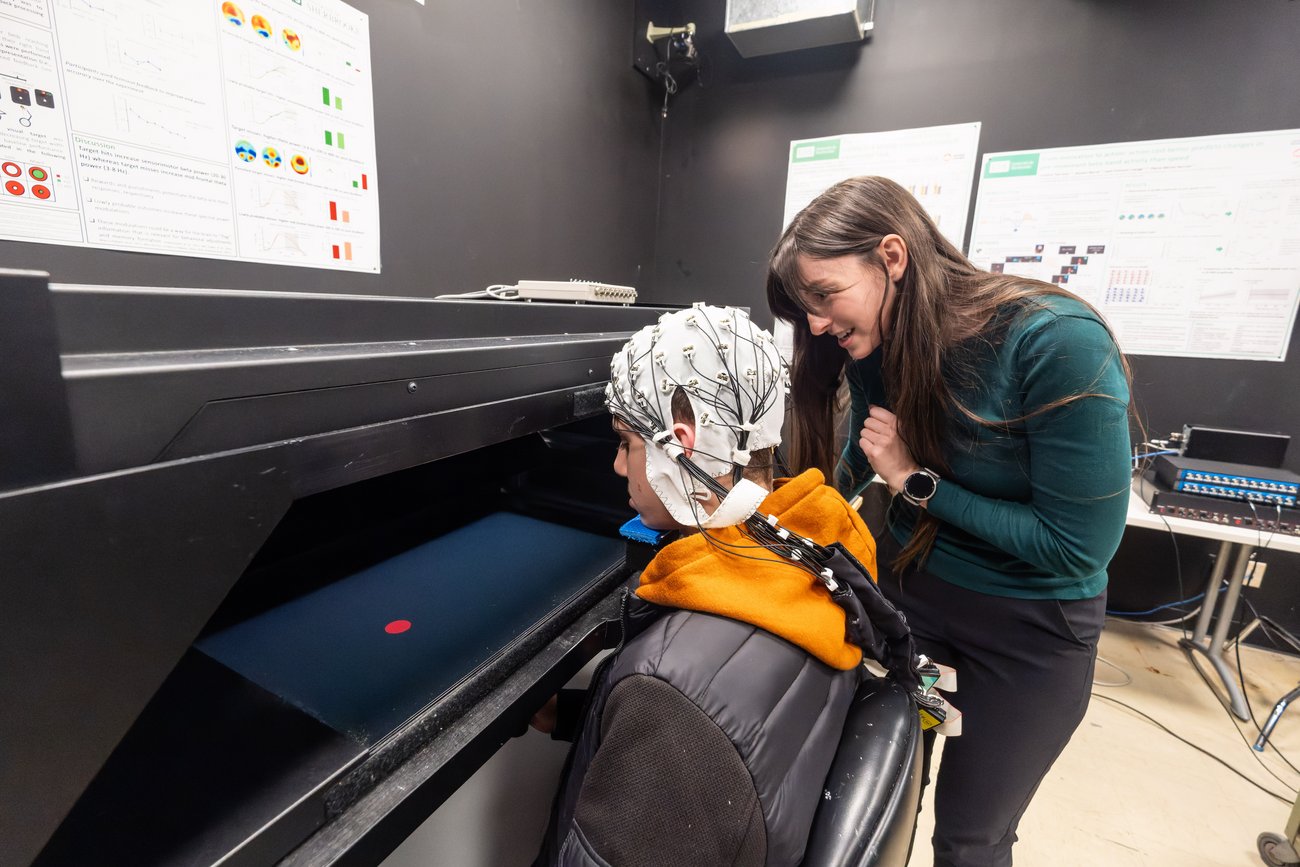
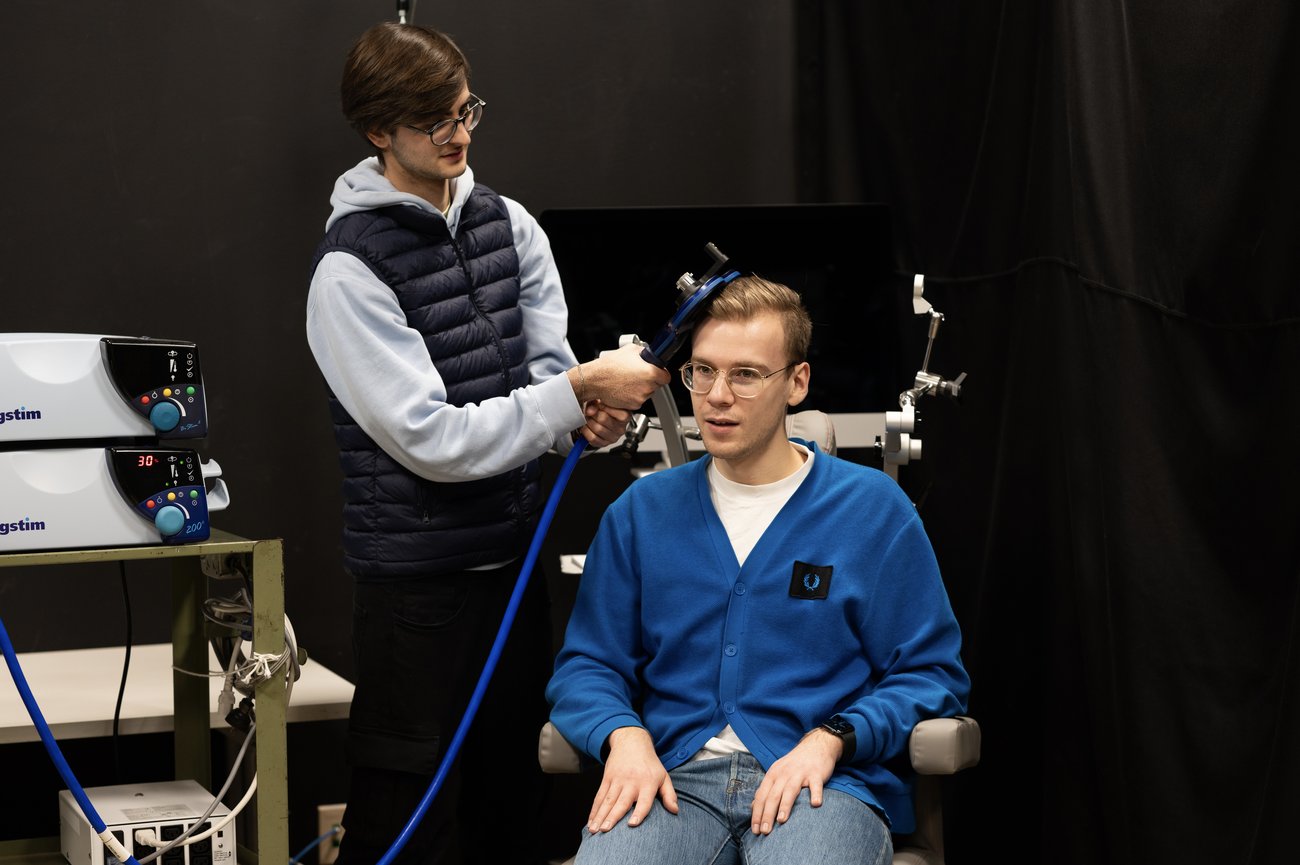
We use a multi-modal approach including a robotic manipulandum (KINARM) and EMG for behavioral experiments, paired with non-invasive neuroimaging (i.e., electroencephalography) and brain stimulation techniques.
One unique interest is to probe rhythmic brain activity during movement, as a reflection of communication within distributed sensorimotor regions. By characterizing neural activity that supports movement, and how it changes over the course of learning, we can optimize how motor skills are learned and retained.
Impact
This research finds application in technology development, in particular the non-invasive decoding of motor intentions for brain-machine interface and robotics. It also contributes to the clinic, as characterization of the principles of sensorimotor neuroplasticity can help orient rehabilitation interventions for brain injured patient populations.
Our current research projects
The factors that mediate the beneficial influence of acute exercise on motor learning and neuroplasticity.
The identification of neural biomarkers of systems-level neuroplastic changes.
The neurocomputational bases of action preparation, and how action selection is influenced by motor costs and rewards.
The optimization of rehab protocols in multiple sclerosis, through enhanced robot-assisted characterization of sensory, motor and learning deficits.